

On The Tier... By Bill Kissinger
The “New Death Row” building at Angola has 8 tiers of 1-man cells, labeled “A” through “H”.

I’m a Vietnam veteran who served 47 calendar years in Angola, Louisiana’s state penitentiary. We had a number of veterans there, many Vietnam veterans. When I first got to Angola, there were a few WWII and Korean veterans. As an Inmate Counsel, I had successfully helped several of them - one an 80-year-old man who had been convicted of growing marijuana on his own property to help his ailing wife. He was in the Robert E. Bartlett Treatment Center hospital ward. He was from Shreveport. I got him a reduction order from the judge to five years. He died before they could process it and him.
Now, all of the WWII veterans and Korean veterans are all dead, and the Vietnam veterans are quickly dwindling in number. Now it’s mostly Desert Storm and Iraq veterans and “peacetime warriors.”
The fluorescent lights never turned off on C-Tier. They hummed constantly, a thin electric whine that burrowed into the skull and stayed there, needling thought, flattening time. The humming was coupled with the ever-present roaring of the wall fans mounted between the TVs. The men inside these cells stopped noticing it after a while. Or maybe they didn’t - they just stopped mentioning it, the way you stop talking about gravity or breathing.
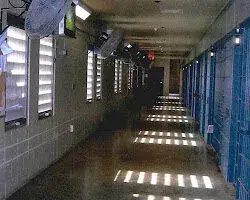
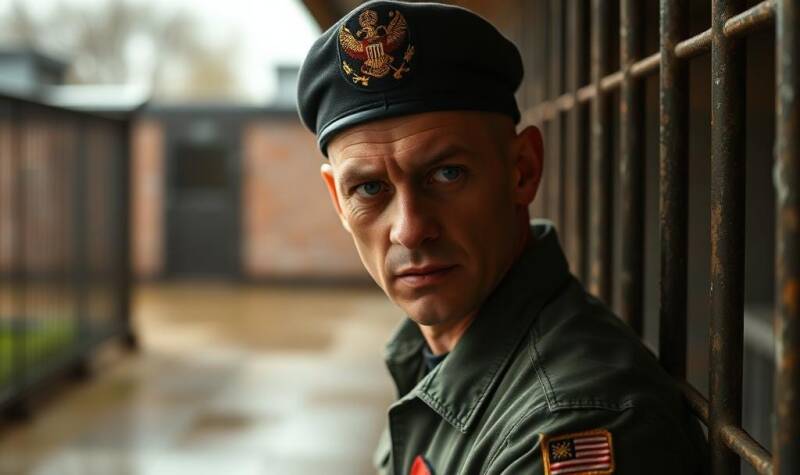
Elias Rook noticed everything.*
He noticed the rhythm of footsteps before a guard rounded the corner and slammed the button that opened the door to the tier. He noticed the way voices sharpened just before conflict. He noticed how his own thoughts sometimes arrived too fast, like a train that refused to brake. And he noticed - though he could never quite explain it - how certain moments felt detached, like watching himself from across the room.
“Rook,” the guard said, tapping the bars. “You’ve got a legal non-contact.”
Elias stood slowly. Not out of defiance, but because sudden movement made the world tilt a little bit. It always had, ever since the blast.
They said it was a landmine that was hidden beneath a forest floor scattered with leaves and sticks and jungle detritus. Three troops were seriously injured in the blast. They said he was “lucky” to survive. They said a lot of things back then, in uniforms and offices and briefings. Words stacked on top of each other until they lost meaning. What remained was pressure - inside his skull, behind his eyes, like something swelling and unseen.
In the attorney-client booth, the air was colder.
His lawyer, Dana Weiss*, sat across the other side of the glass from him, files spread out like a losing hand of cards. She looked tired in the way people do when they’ve been explaining the same thing for years and no one listens.
“They’re not going to consider the new evaluation,” she said, not looking up at first.
Elias tilted his head. “Why?”
She exhaled, finally meeting his eyes. “Because they already decided what it means.”
He smiled faintly. Not because it was funny, but because his face sometimes did that on its own. It had cost him before - jurors mistaking it for indifference, for something colder…like he didn’t have a soul or something.
“The scans show clear frontal lobe damage,” she continued, tapping a page. “Impulse control, emotional regulation - this isn’t speculative. It’s visible.”
Elias watched her finger move across the paper. He tried to follow the words, but they slipped, rearranged themselves, dissolved into fragments.
“They said that last time,” he murmured.
“I know.”
“And it didn’t matter.”
Dana hesitated. “No,” she said. “It didn’t.” In the courtroom, years earlier at a trial hearing, the prosecutor had paced deliberately, like a man performing with certainty.
“Ladies and gentlemen,” he said, voice steady, “you’ve heard about diagnoses. Labels. Conditions.” He paused, letting the words hang. “But what you’ve really seen is behavior.”
He turned, gesturing toward Elias.
“Outbursts. Lack of remorse. Detachment. These aren’t excuses - they’re warnings.”
A juror shifted in her seat.
The prosecutor leaned forward slightly, lowering his voice. “Ask yourselves this: if someone cannot control themselves… if they cannot feel what we feel… what does that mean for the future?”
He let the question linger, unanswered but heavy.
“Danger,” he said finally.
No one explained to the jury how the frontal lobe works like a brake. No one explained what happens when the brake fails. No one explained that what looked like coldness might be disconnection - that emotion, once vivid, now arrived distorted or late or not at all.
Instead, they watched Elias sit too still. They watched him react too slowly. They watched him smile at the wrong moment.
And they decided what those things meant.
Down the tier from Elias, in another cell, a man named Corbin muttered to himself in fragments of prayer and static. He had carved symbols into the inside of his arm years ago - intricate, deliberate patterns that only he understood, that held meaning only for him.
“Thomas case,” one of the guards had said once, offhand, during a shift change. “Reminds me of that.”
The other guard nodded. “Yeah. Jury ate it up. Said it proved he’d do it again.”
Corbin laughed softly from his cell, though no one had spoken to him.
Dana had tried to bring in an expert.
A neurologist with decades of experience. Brain scans. Clinical language translated into something a jury could grasp.
“He doesn’t lack remorse,” the expert had said during a pretrial hearing. “He lacks the ability to process and express it in a typical way. The injury disrupts - ”
The prosecutor had interrupted…
“So you’re saying he’s unpredictable.”
“I’m saying his behavior is medically explainable.”
“And potentially uncontrollable.”
The expert paused. “In certain conditions, yes.”
That was the phrase that stuck.
Not explainable. Not injured.
Uncontrollable.
In another case, another courtroom, a veteran sat rigid in his chair while testimony unfolded around him like a script he’d never read.
He had served two tours. He had come back with a diagnosis stamped into paperwork that no one outside the system seemed to understand. It was a new term, and it replaced “Shell Shock” which had replaced “Battle Fatigue” which had replaced whatever came before it.
PTSD.
They said it like it was a footnote, like an explanation that didn’t explain anything.
They did not describe the nights where sleep fractured into fragments of memory and noise. They did not describe how the body could react before thought intervened, how threat could be perceived where none existed, how time could collapse into a single overwhelming instant.
Instead, the prosecutor spoke of volatility.
Of unpredictability.
Of risk.
The word “dangerous” surfaced again, as it always seemed to.
And once it was spoken, it did not leave the room.
Back on C-Tier, Elias sat on the edge of his bunk, staring at his hands.
He tried to remember the exact sequence of events from that night - the argument, the surge of heat behind his eyes, the moment where everything accelerated beyond control and the sudden burst of speed that went with it.
But memory didn’t return cleanly. It came in fragments, in pieces, in shards. Sound before meaning. Motion before intention. Aftermath before understanding.
He had asked once, during an evaluation, “If I didn’t feel it the way they think I should… does that mean I didn’t feel it at all?”
The evaluator had hesitated.
“No,” she said carefully. “It means your brain processes it differently.”
Elias nodded at the time, though the answer had felt incomplete.
Different, he had learned, was often treated the same as absent.
And absent was often treated the same as dangerous.
The system preferred clarity.
Clear intent.
Clear emotion.
Clear narratives that fit within the boundaries of expectation.
Neurological damage complicated that.
Mental illness distorted it.
Trauma fractured it.
So those elements were often reshaped - translated into something simpler, more legible, something a jury of “peers” who weren’t really peers at all could understand.
A man with a brain injury became a man who couldn’t control himself. A man with schizophrenia became a man whose own mind proved his threat.
A veteran with PTSD became a man trained for violence who could not leave it behind.
Each transformation carried the same underlying message.
Not mitigation.
Prediction.
Dana closed her file.
“They’re not arguing that you weren’t injured,” she said quietly. “They’re arguing that the injury makes you more dangerous.”
Elias considered that.
“So the reason,” he said slowly, “becomes the proof.”
She didn’t answer. She didn’t need to.
That night, the lights hummed as they always did.
Elias lay back on the narrow mattress, staring at the ceiling, where faint cracks formed patterns that almost looked purposeful.
Somewhere down the hall, Corbin began whispering again. Somewhere beyond the walls, decisions were being finalized, dates set, processes moving forward with mechanical precision.
Inside his skull, the pressure remained - constant, invisible, undeniable. A silent factor. One that could be documented, scanned, explained. One that could be spoken about in courtrooms and written into reports. And one that, more often than not, was heard - but not understood.
The hum of the lights and fans continued, steady and unbroken, long after everything else had been decided. Long after everyone else on the tier had finally fallen asleep and the sergeant had slipped down the hall and turned the TVs off.
-
= I changed the names to conceal their true identity.
-
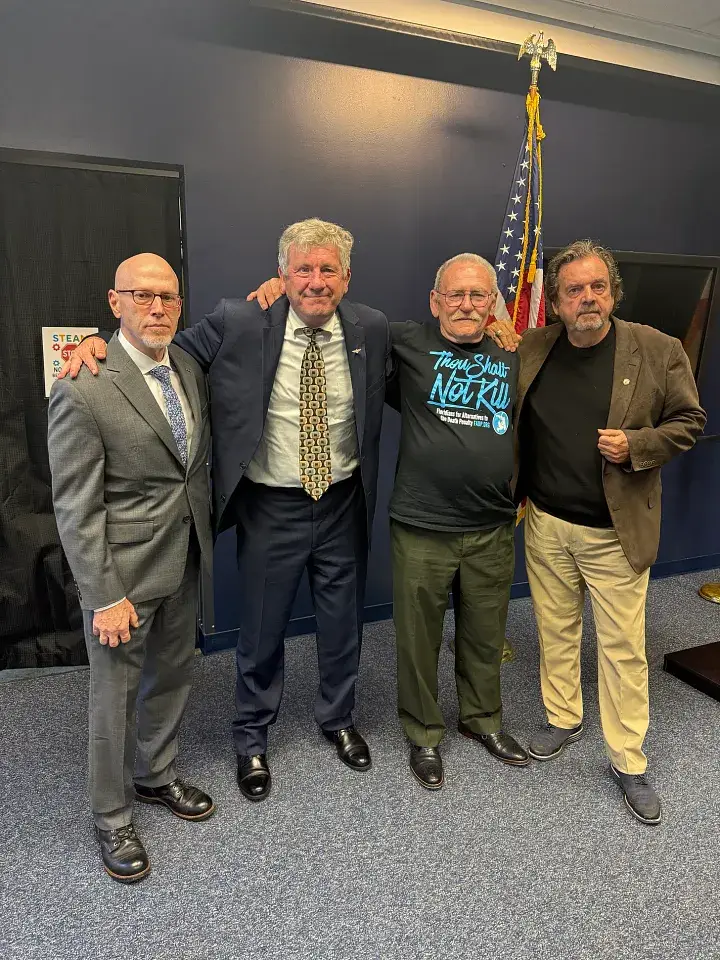
This is straight from my own lived experience. Last year, at the height of Ron DeSantis’ execution spree, a group of us - Vietnam veterans all - gathered for a press conference and public gathering where we told people about the trauma experienced by Veterans. We were trying to help save the life of a veteran. He was executed anyway.

Add comment
Comments